 English
 Spanish
 French
 German
 Italian
 Chinese (Simplified)
 Japanese
 Korean
 Arabic
 Portuguese
 08045804620

 Send Inquiry
Nylon Wire Mesh
Price 12 INR/ Square Foot
MOQ : 10 Square Foots
Nylon Wire Mesh Specification
- Surface Treatment
- Painted
- Hole Shape
- Square
- Aperture
- Available in various sizes (customizable)
- Wire Gauge
- Standard (varies per requirement)
- Length
- Customized as per order
- Product Type
- Wire Mesh
- Mesh Type
- Iron Wire Mesh
- Mesh Style
- Plain Mesh
- Material
- Other
- Alloy
- Not applicable (synthetic fiber)
- Application
- Filtration, Sieving, Industrial Usage, Decorative
- Dimensions
- Standard and custom sizes available
- Wire Diameter
- Typically ranges from 0.1 mm to 1 mm
- Weight
- Lightweight, varies by mesh count and dimensions
- Color
- White
- Open Area
- 6080% (varies by mesh size)
- Chemical Resistance
- Good against acids & alkalis
- Feature
- Corrosion resistant, Durable, Flexible, Easy to clean
- Weave Type
- Plain weave
- Packing Type
- Rolls or as per customer specifications
- Temperature Resistance
- Up to 120C
Nylon Wire Mesh Trade Information
- Minimum Order Quantity
- 10 Square Foots
- Supply Ability
- 10 Square Foots Per Day
- Delivery Time
- 1 Week
- Packaging Details
- Carton Box
- Main Domestic Market
- All India
About Nylon Wire Mesh
Nylon Wire Mesh offered by us is widely utilized for printing, screening, filtering, and surgical purposes. It is said to be light in weight and assures a bright & clear printed surface. This mesh can also be availed with an adhesive backing layer on request. It is completely non-toxic in nature and can easily be recycled. This wire mesh is highly resistant to most chemicals and shows good UV stability. It is available in different colors and mesh sizes as demanded by our trusted customers. Nylon Wire Mesh provided by us can easily be printed with the help of latest digital printers without causing much wear to printhead rollers.
Special Features :
- It is used as suitable filtration element for filter cloth and disc.
- Apart from nylon thread, standard grade PP and polyester have been used for its fabrication.
- Available in different micron range of mesh, width and thickness based options
- Excellent elongation rate, high temperature enduring capacity and uniform filament structure
Product details
|
Filter Rating |
27%-80% nylon filter mesh |
|
Usage |
Liquid Filter |
|
Material |
Nylon |
|
Hole Shape |
Square |
Robust Construction and Adaptability
This nylon wire mesh stands out for its plain weave structure, lightweight profile, and versatility. Engineers can select from a wide range of aperture sizes and wire gauges based on filtration needs or decorative preferences. Its synthetic fiber build keeps it rust-free and effective in diverse environments.
Superior Chemical and Temperature Resistance
Engineered to withstand temperatures up to 120C and resist degradation from most acids and alkalis, this mesh is well-suited for industrial settings. Its painted surface enhances durability, while easy cleaning procedures ensure maintenance is straightforward.
Flexible Sizing for Every Application
We accommodate customer-specific demands by offering both standard and tailored dimensions. From sieving granular materials to enhancing architectural aesthetics, the meshs customization options ensure it fits seamlessly into a variety of projects.
FAQs of Nylon Wire Mesh:
Q: How is the nylon wire mesh typically used across industries?
A: Nylon wire mesh is widely used in filtration, sieving, and industrial applications due to its high open area, durability, and resistance to corrosion. Its also employed in decorative and architectural projects where a lightweight yet robust mesh is needed.Q: What is the process for ordering customized sizes and specifications?
A: Customers can specify their requirements for wire diameter, aperture, length, color, and packing type. Orders can be tailored to standard or custom dimensions, and our team will guide you through the process to ensure the correct mesh for your application.Q: When should I choose a plain weave nylon wire mesh over other options?
A: Plain weave nylon wire mesh is ideal when you need maximum flexibility, chemical resistance, and a consistent open area. Its structure is suitable for precise sieving and filtration, especially where corrosion resistance and easy cleaning are priorities.Q: Where can the mesh be installed or applied?
A: The mesh can be installed in various settings, including industrial filtration equipment, laboratory sieves, architectural facades, and decorative panels. Its adaptability ensures it meets the demands of both functional and aesthetic applications.Q: What are the main benefits of using a nylon wire mesh with painted surface treatment?
A: A painted surface further enhances the meshs resistance to environmental factors, increases longevity, and provides an easy-to-clean finish. It also allows for color customization to match specific project requirements.Q: Is the mesh safe to use with acids and alkalis?
A: Yes, the nylon mesh offers good chemical resistance, making it appropriate for environments involving exposure to acids and alkalis. However, verifying compatibility with your exact chemicals is advisable for optimum performance.Q: How should the mesh be maintained to ensure longevity?
A: Nylon mesh is easy to maintain; regular cleaning with water or mild detergent will suffice. Avoid using harsh cleaning agents not compatible with nylon fibers to preserve its durability and function over time.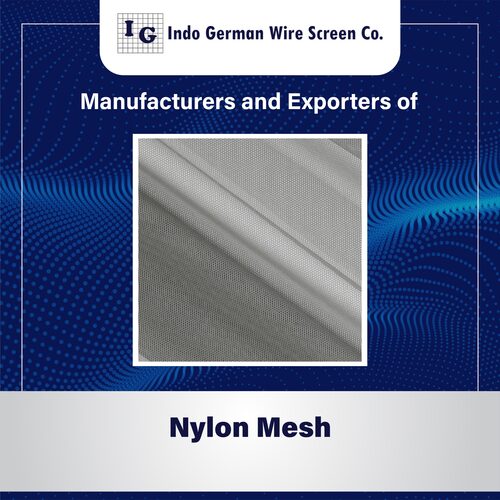
Tell us about your requirement

Price:
Quantity
Select Unit
- 50
- 100
- 200
- 250
- 500
- 1000+
Additional detail
Mobile number
Email

More Products in Wire Mesh Category
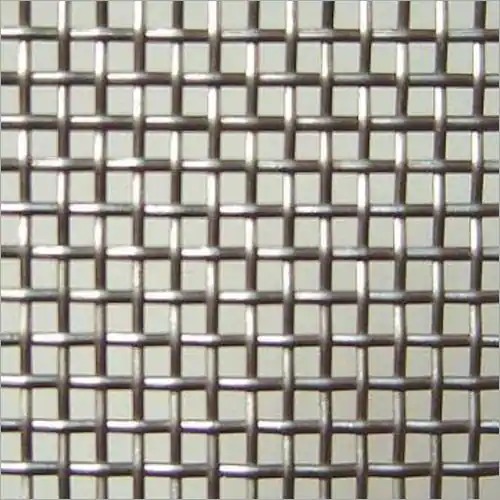
Metal Wire Mesh
Minimum Order Quantity : 100 Square Foots
Mesh Type : Other
Material : Stainless Steel
Product Type : Wire Mesh
Color : Siver
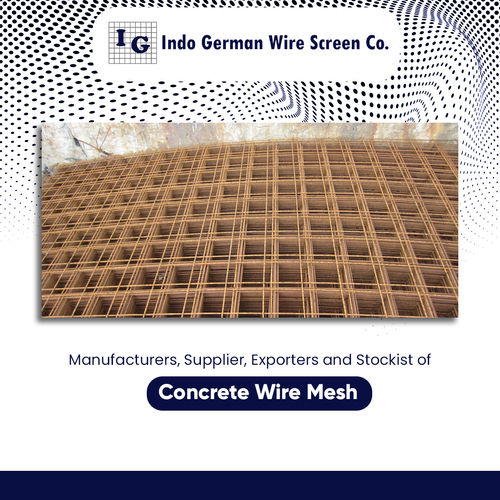
Concrete Weld Mesh
Price 15 INR / Square Foot
Minimum Order Quantity : 10 Square Foots
Mesh Type : Galvanized Iron Wire
Material : Iron
Product Type : Wire Mesh
Color : Brown
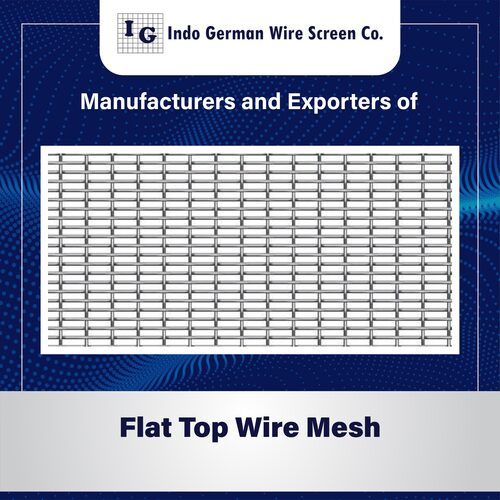
Flat Top Wire Mesh
Price 120 INR
Minimum Order Quantity : 10 Square Meters
Mesh Type : Steel Wire Mesh
Material : Steel
Product Type : Wire Mesh
Color : Sliver
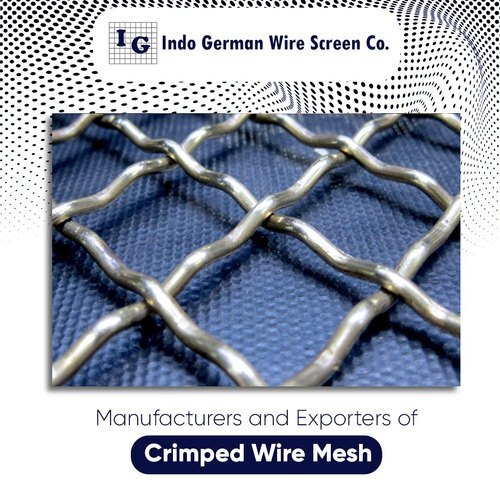
S.S. Crimped Wire Mesh
Price 150 INR / Square Foot
Minimum Order Quantity : 10 Square Foots
Mesh Type : Steel Wire Mesh
Material : Stainless Steel
Product Type : Wire Mesh
Color : Silver

Contact Details
INDO GERMAN WIRE SCREEN CO.
GST : 27AGKPD4601J1ZK
GST : 27AGKPD4601J1ZK
address
- 134, Keytuo Industrial Estate, 220, Kondivita Road, Andheri (East), Mumbai - 400059, Maharashtra, India
- Phone :08045804620
- Send Inquiry
 Send Inquiry
Key Personnal
- Mr Manoj Doshi (Marketing Manager)
- Mobile :08045804620

|


 Send Inquiry
 Send SMS
 |
INDO GERMAN WIRE SCREEN CO.
All Rights Reserved.(Terms of Use) Developed and Managed by Infocom Network Private Limited. |
