 English
 Spanish
 French
 German
 Italian
 Chinese (Simplified)
 Japanese
 Korean
 Arabic
 Portuguese
 08045804620

 Send Inquiry
Wire Mesh Disc
Price 250 INR/ Piece
MOQ : 100 Pieces
Wire Mesh Disc Specification
- Wire Gauge
- 24 to 30 SWG (Standard Wire Gauge)
- Aperture
- 0.5 mm to 2.5 mm
- Length
- Customizable; typically up to 500 mm
- Hole Shape
- Round
- Surface Treatment
- Polished
- Product Type
- Wire Mesh
- Mesh Type
- Steel Wire Mesh
- Mesh Style
- Single-layer or multi-layer
- Material
- Steel
- Alloy
- Mild Steel, Stainless Steel (SS304/SS316)
- Application
- Other
- Dimensions
- Available diameters: 25 mm, 50 mm, 75 mm, 100 mm, 150 mm, custom options
- Wire Diameter
- 0.4 mm to 0.8 mm
- Weight
- Depends on dimension; standard discs weigh between 5 g to 120 g
- Color
- Silver
- Edge Type
- Plain or Framed
- Packing Type
- Carton Box or Custom Packing
- Thickness
- 0.5 mm to 3 mm
- Shape
- Disc
- Usage Life
- Typically 2-5 years depending on application
- Technique
- Woven or Sintered
- Corrosion Resistance
- High, Suitable for industrial and chemical processes
- Operating Temperature
- Up to 400°C
Wire Mesh Disc Trade Information
- Minimum Order Quantity
- 100 Pieces
- Supply Ability
- 10 Pieces Per Day
- Delivery Time
- 1 Week
- Packaging Details
- Carton Box
- Main Domestic Market
- All India
About Wire Mesh Disc
Wire Mesh Filter Discselection is based on the application, characteristics of material to be filtered, process goal etc. asWire Mesh Filter Discis one of the important elements in filtration using filter press. The Filter Discs come in many different materials including polypropylene, cotton, polyester, and other synthetic materials. We supplyWire Mesh Filter Discbased on our previous experience or by taking filtration trials with the taster slurry given by the customer. The cloths are made from multifilament fibres, monofilament fibres, or spun fibres with different weave patterns such as twill weave, plain weave etc. The clothes will be finished in numerous ways like Heat set, calendared, single-glazed to facilitate easy cake release.
Enhanced Filtration Performance
Designed for optimal filtration, Wire Mesh Discs ensure efficient separation and particle retention in demanding environments. Their multi-layered construction and precise wire gauge selection guarantee durability and reliability, supporting extended usage in chemical and industrial processes.
Versatility in Industrial Applications
With customizable diameters, mesh types, and edge styles, these discs are suitable for a variety of processes, including chemical filtration, powder screening, and gas purification. They can be tailored to fit specific machinery or operational requirements, offering flexibility for manufacturers and exporters.
Long-Lasting Corrosion Resistance
Manufactured from high-grade stainless steel or mild steel, our discs maintain integrity even under continuous exposure to corrosive substances or elevated temperatures. The polished surface treatment further enhances resistance, reducing maintenance needs and prolonging product life.
FAQs of Wire Mesh Disc:
Q: How are wire mesh discs manufactured for industrial use?
A: Wire mesh discs are produced using woven or sintered techniques, with each method tailored for specific filtration requirements. The discs are made from steel wire mesh, which is precision cut, shaped into discs, and treated with a polished finish for improved corrosion resistance and durability.Q: What benefits do wire mesh discs offer in chemical processing applications?
A: These discs provide high corrosion resistance and reliable operation at temperatures up to 400C, making them ideal for chemical processing environments. Their customizable dimensions and mesh styles support effective filtration, separation, and screening tasks.Q: When should wire mesh discs be replaced during industrial operations?
A: Wire mesh discs generally have a service life of two to five years, depending on application conditions and maintenance practices. Replacement is recommended when the mesh shows signs of clogging, wear, or decreased filtration efficiency.Q: Where can custom-sized wire mesh discs be obtained in India?
A: Custom-sized wire mesh discs are available through manufacturers, suppliers, traders, and exporters in India. These providers offer a range of diameters, mesh types, and edge configurations to suit specific operational requirements.Q: What is the usage process for wire mesh discs in filtration systems?
A: Wire mesh discs are inserted into filtration units or process machinery. Depending on the system, they function as primary or secondary filters, trapping particles while allowing fluids or gases to pass through their woven or sintered mesh structure.Q: How does the surface treatment of wire mesh discs enhance their performance?
A: The polished surface treatment improves corrosion resistance and facilitates easier cleaning. This extends the operational life of the discs and maintains consistent filtration quality over extended periods.Q: What are the main advantages of choosing stainless steel wire mesh discs over mild steel?
A: Stainless steel discs (SS304/SS316) offer superior corrosion resistance and strength, making them preferable for harsh chemical environments or prolonged exposure to moisture. Mild steel options are effective for less demanding applications where cost efficiency is a priority.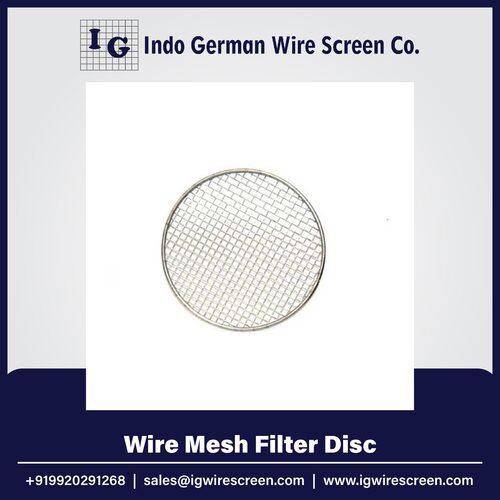
Tell us about your requirement

Price:
Quantity
Select Unit
- 50
- 100
- 200
- 250
- 500
- 1000+
Additional detail
Mobile number
Email

More Products in Wire Mesh Category
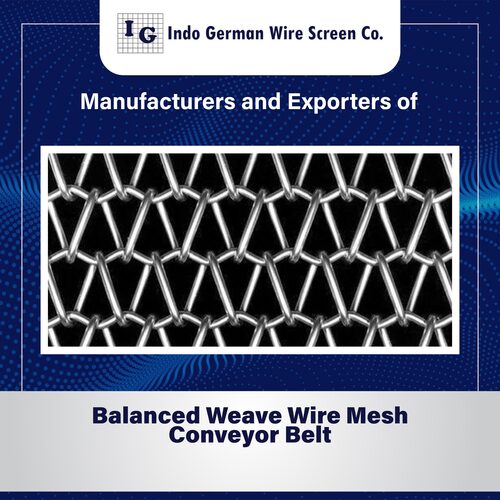
Balanced Weave Wire Mesh Conveyor Belt
Price 1000-100000.00 INR / Foot
Minimum Order Quantity : 50 Feet, ,
Material : Steel
Mesh Style : Other , Balanced Weave
Product Type : Wire Mesh
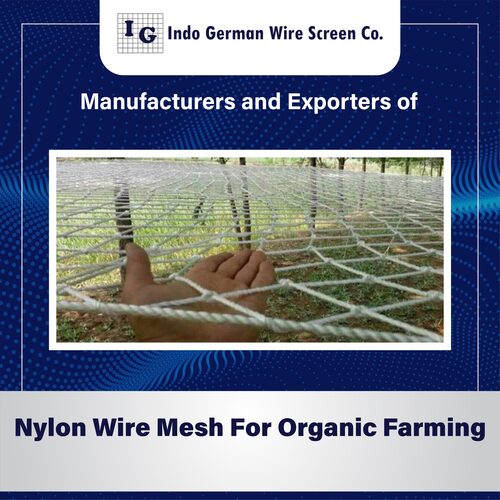
Nylon Wire Mesh For Organic Farming
Price 1000-100000.00 INR / Foot
Minimum Order Quantity : 50 Feet
Material : Steel
Mesh Style : Other , Woven
Product Type : Wire Mesh
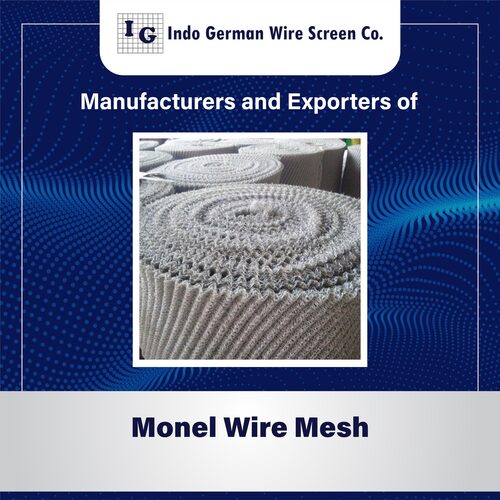
Monel Wire Mesh
Price Range 450.00 - 1500.00 INR / Square Foot
Minimum Order Quantity : 10 Square Foots
Material : Other
Mesh Style : Woven Mesh
Product Type : Wire Mesh
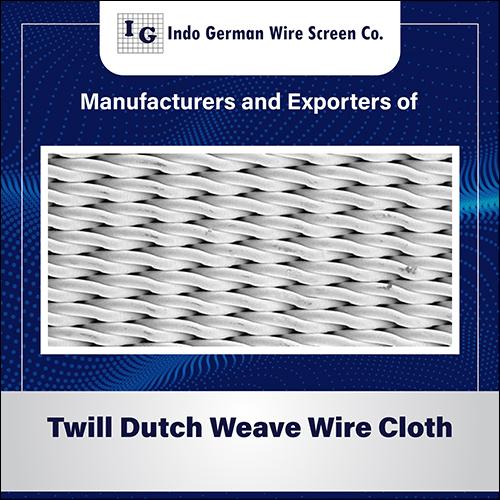
Twill Dutch Weave Wire Mesh
Price 130 INR / Square Foot
Minimum Order Quantity : 10 Square Foots
Material : Steel
Mesh Style : Weave Wire Mesh
Product Type : Wire Mesh

Contact Details
INDO GERMAN WIRE SCREEN CO.
GST : 27AGKPD4601J1ZK
GST : 27AGKPD4601J1ZK
address
- 134, Keytuo Industrial Estate, 220, Kondivita Road, Andheri (East), Mumbai - 400059, Maharashtra, India
- Phone :08045804620
- Send Inquiry
 Send Inquiry
Key Personnal
- Mr Manoj Doshi (Marketing Manager)
- Mobile :08045804620

|


 Send Inquiry
 Send SMS
 Call Me Free
 |
INDO GERMAN WIRE SCREEN CO.
All Rights Reserved.(Terms of Use) Developed and Managed by Infocom Network Private Limited. |
